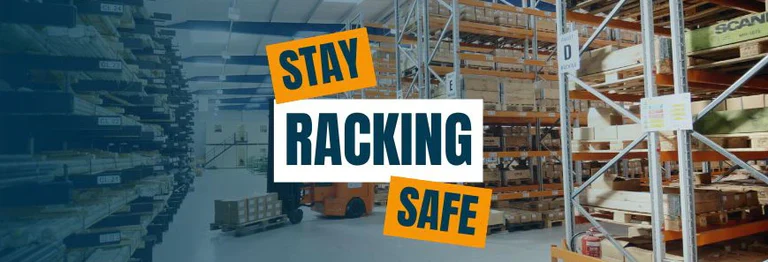
The 2026 Warehouse Rack Safety Playbook Has Dropped

The pace of change in warehousing shows no sign of slowing in 2026. Automation, robotics and smarter systems are transforming how goods are stored and moved, but the more advanced warehouse operations become, the more important the fundamentals. Sitting at the heart of all this – your racking.
This “2026 Warehouse Racking Safety Playbook” sets out what good looks like today and why getting the basics right is more critical than ever.
Holding It All Together in 2026? Step Forward Your Racking
As 2026 gets under way, it’s fair to say that warehouses across the UK are operating in a world that we would have barely recognised a decade ago.
Warehouse Management Systems (WMS) have improved the management of stock. Automation is no longer a future prediction, and robotics are no longer confined to pilot projects. Smart storage systems have earned our trust to move stock, optimise warehouse layouts and influence day-to-day working patterns.
And yes, this brave new world is exciting and full of opportunity, but it also makes one thing clearer than ever, none of it can function safely or reliably without that silent structure holding it all together. Your racking.
Every single day your racking supports hundreds of tonnes of stock, defines how space is used and underpins productivity. When designed, installed and maintained correctly, it does not shout for attention. It works quietly in the background, enabling stock to flow smoothly and orders to leave on time. But, when it fails, the consequences are immediate – damaged stock, blocked aisles and delayed orders. And that is before considering the very real safety risk to your employees working beneath the racking.

That’s why racking safety cannot be treated as an afterthought. This playbook looks at the practical steps you need to take to ensure your racking performs safely, compliantly and reliably throughout this year and in the future.
What staying racking safe in 2026 really looks like
Warehouses are under more scrutiny than they ever were. Online sales have increased putting warehouses under pressure to hold more stock and increase operational speed. As a result, margin for error are shrinking, increasing the risk of an accident.
What warehouse owners must realise is that racking safety is not a one-off task or a box to tick. Instead, it requires a preventative mindset that continuously runs through the lifetime of your storage equipment.

1. Know the regulations
As the warehouse owner or manager, you have a legal duty to ensure your employees stay safe at work. But did you know your responsibility also extends to ensuring the machinery and equipment used within the warehouse is fit for purpose and safe. This includes your racking!
While HSE legislation such as the Health and Safety at Work Act, or Provision and Use of Work Equipment Regulations recommend regular maintenance of ‘work equipment’, they do not look at the other key stages in your racking’s lifetime.
For more specific safety guidance, HSG76 Warehousing and Storage sets out best practice for warehouse solutions. The document covers manual handling, working at height and site transport as well as racking shelving storage systems. SEMA Codes of Practice go even further by providing detailed guidance on the design, installation, use and maintenance of racking. These SEMA Code of Practice are relevant not only to racking suppliers but to anyone responsible for storage equipment.
2. Compliance starts with action - not delegation
Racking safety is often assumed a job ‘handled’ by your supplier, installers or inspectors. While these partners play a vital role, they can only support you so far and accountability sits with you. Because, when something goes wrong, it’s your decisions that are examined!
If you fail to demonstrate that you have implemented best practice across all stages of your racking’s lifetime, it can result in the HSE issuing hefty fines and, in worst case scenarios, a prison sentence.
This is where SEMA steps in. We help strip away all the confusion by laying out he dos and don’ts when it comes to the safety of your racking
If you’d like a good starting point, why not download our FREE Stay Racking Safe guide which offers the steps you need to follow for safe racking.
3. Choose your racking supplier wisely
If you’re going to change anything in 2026 when it comes to racking safety, take a look at your suppliers. After all, there are certain elements of your racking which rely on external partners and the safety of your storage equipment will rely on them.
Does your racking supplier fully understand industry standards and how to design racking that meets your warehouse needs? Have they factored in safety systems when designing your equipment? Has the installation team installing your racking been trained so they understand correct racking installation methods or have they simply learnt on the job?
While these questions may not seem critical towards the safety of your warehouse, the difference between your supplier understanding or failing to understand critical measures and industry standards can significantly impact your racking’s safety.

4. Racking safety lives on the warehouse floor
Once racking is up and running on the warehouse floor, it’s time to put best practice into action.
The first step is to appoint a Person Responsible for Rack Safety (PRRS). They will take accountability for racking safety systems by ensuring inspections are planned, recorded and damage acted upon. They also have a crucial role in identifying damage patterns and helping you put in preventative measures.
You then need to provide training for your employees to ensure they understand how to:
- Work safely in areas with pallet racking
- Read the Load Notice sign
- Load the racking correctly to minimise unnecessary stress that damages the structure
- Spot if there is an issue.
Tick all these boxes and it will significantly reduce ongoing repair costs and, most importantly, create a safe working space for your employees.

5. Don’t forget inspection
Regular warehouse racking inspections have always been a requirement, but correct steps are not always followed.
In many warehouses, inspections can slip down the priority list when operations are under pressure. Or, even worse, if inspections are conducted and damage recorded, no further action is taken to remedy the issue!
In 2026, as operations increase, this gap is becoming more exposed. Yet, when rack safety inspections are missed or poorly understood, those minor defects can go unnoticed until they disrupt operations or even injure a member of your staff.
The process is very clear:
- Train your employees on how to conduct Visual Inspections. This is an important part of your legal responsibilities. Their rack safety inspection report will identify impact damage if it occurs which the PRRS can then act upon.
- Expert inspections complete the picture but these can only be conducted by a trained professional. This independent racking inspection conducts a site assessment of your equipment to check the structural stability the system including floor fixings, compatibility with other equipment, ensure correct loading is being followed and record damage with a timescale for repairs.
Are you ready for safer pallet racking in 2026?
If you take your end user responsibilities seriously, then this year should be all about safe racking.
At SEMA we help warehouse owners and managers take the correct steps to ensure their racking is compliant, safe and works as intended. We audit our SEMA Approved Members to ensure they are working to the highest quality and SEMA safety standards. This saves you the legwork of checking their credentials and provides certainty on their validity.
We also provide our Rack Safety Awareness training courses for your employees to help them undertake the role of PRRS and conduct the visual inspections. Finally, our SEMA Approved Racking Inspector (SARI) initiative trains inspectors on how to deliver the highest quality and safety levels in their Expert Inspections.
If you’d like to find out more about the work of SEMA, click on the links below:
Take the right steps now and make sure your warehouse is ready for a safer, smarter year ahead.