Buying Storage Systems For Your Warehouse? This Is Why Your Supplier Should Be SEMA Approved

You’ve got an empty warehouse and you need to fill it with pallet racking.
What do you do?
- Jump online and find a warehouse racking company who can demonstrate years of experience within the storage equipment industry?
- Look for a supplier with an impressive website?
- Maybe you’ll go for a recommendation from a friend to solve your storage problem?
- You might get a few companies round and see which one ‘feels right’.
The danger of choosing the wrong warehouse racking companies for Storage systems
Your pallet racking is performing the incredibly important job of holding up tonnes of stock above your employee’s head. If that heavy load falls unexpectedly due to an incorrect design, overloading or installation, it could seriously injure or kill anyone standing on the warehouse floor.Serious warehouse racking accidents in the UK are still relatively rare. However, there has, in recent years, been plenty of incidents where forklift trucks and drivers have been trapped, merchandise destroyed, and workflows were brought to a standstill.These accidents are usually down to one of three reasons:- The design and manufacture of the structure
- The installation of the racking and
- Poor maintenance.
The false economy of cost-reducing storage systems
Expense is always a consideration. But in the world of warehouse storage solutions, the phrase “buy cheap, buy twice” often holds true.When appointing a partner for racking installation, a poor choice can expose you to serious risks – particularly if they don’t provide appropriate guidance on load capacity or fail to specify the right setup for your products. And if your business is growing, ill-suited foresight may result in a racking system that no longer meets your industrial storage needs or can’t scale. This can increase the likelihood of misuse, overloading and potentially structural failure as time goes on.Partnering with a subpar contractor can also affect day-to-day productivity gains. Inexperienced teams may overlook opportunities to optimise storage capacity and storage space density, layout or picking flow, leaving you with wasted areas and slower procedures. Plus, without the right qualifications, racking systems may be poorly fitted, inadequately documented and unsupported down the line.There is also the financial appeal of second-hand pallet racking systems, but it may come at a higher price. A lack of traceable documents, unguaranteed load capacities and no assurances around quality and previous use of second-hand pallet racking systems could burden you with storage systems that doesn’t comply with PUWER or HSE rules. You should also be aware that, unlike new racking purchases, there are no requirements for the supplier to meet design standards such as SEMA Design Codes and EN 115512.Go for second hand and it could result in replacing or reinstalling your racking sooner than planned – doubling your costs, potential downtime and hours lost organising its build.
What to expect from a quality pallet racking supplier
When you search online for pallet racking suppliers you will notice many boast they have accreditations such as ISO, CHAS, and SafeContractor. While these certifications are important when looking for companies that demonstrate health and safety compliance, they are not an indicator on whether their racking solutions will meet industry standards.To check if your racking is meeting the necessary requirements, you need to do some background checks on your supplier. First, check they are designing your racking to meet the requirements of either SEMA Code or the European Code EN 15512. Within the UK, these codes are used to ensure your racking meets necessary safety requirements and will work as intended for your business. These Codes cover everything from load bearing capacity, material specifications, beam tolerances and acceptable aisle width clearances between racking and pallets.However, checking your suppliers’ credentials doesn’t stop with checking their quality in designing your racking. You also need to check the following:
- Do they have the correct insurance documentation in place?
- Are they knowledgeable about the latest industry standards?
- Do they advise on correct loading procedures
- Have they supplied and fixed to the end of your racking a Load Notice which is specific for your structure?
- What racking installation team are they using and have they been adequately trained? It is your responsibility to check!
- What after sales service is available from your supplier?
- Do they use trained inspectors who can visit your warehouse to perform the Expert Inspection?

What makes SEMA Members different?
Checking the credentials of your racking supplier can be an incredibly time-consuming process. Yet it is incredibly important to ensure your pallet racking works as intended and keeps your employees safe. To help out warehouse owners and managers, SEMA has developed an association of like-minded pallet racking suppliers and manufacturers. They all want to achieve a high standard of safety and quality within the storage equipment industry.What really sets our members apart is that fact that they can’t buy their Approved status. Each one has to earn it by demonstrating they meet our high standards.The Membership Assessment Standard process is rigorous and we look at a wide variety of criteria including:
- Does their work meet industry regulations?
- Do they work correctly according to SEMA Codes?
- Do they design for Uniformly Distributed Loads?
- Do they supply correct Load Notices?
- What health and safety certifications do they hold?
- Do they follow correct health and safety procedures?
- Do they have the correct insurance paperwork in place such as employers liability and public liability insurance?
- Are they using trained installers?
- Are they addressing how to reduce their environmental impact?
- Do they have a policy for quality management?
- Do they provide training for their team?
This Membership Assessment Standard (MAS) isn’t something we only conduct when a company is looking to join. Every five years each member must repeat the MAS to ensure they are meeting the necessary requirements. If a company doesn’t meet these quality thresholds, they’re asked to leave.
The added value of SEMA Approved Racking Suppliers
When questioning whether to use a SEMA Approved member over another supplier, you can break the advantages down into two key areas.- Time saved - when you work with a SEMA Member you know we have already checked their credentials. That means you can spend less time chasing key documentation and more time getting on with operations.
- Reduced risk - we’ve already checked that each member is working towards the correct industry safety standards to ensure your structure works safely and as intended.
We also deliver an extra level of quality and safety features by expecting our SEMA Approved Members to only use SEIRS racking installers and SARI racking inspectors.
- What is SEIRS? When ordering pallet racking, it’s easy to accept the installers recommended by your supplier are trained for the job. While some suppliers have their own in-house teams, it’s not uncommon for them to subcontract their installation work. This leaves you potentially exposed with no assurances on the quality of their work. While many racking installers do meet a high standard, there are still those who ‘learn on the job’ without being correctly trained or qualified. SEIRS is a rigorous training programme which delivers training on safe and high quality racking installation methods.
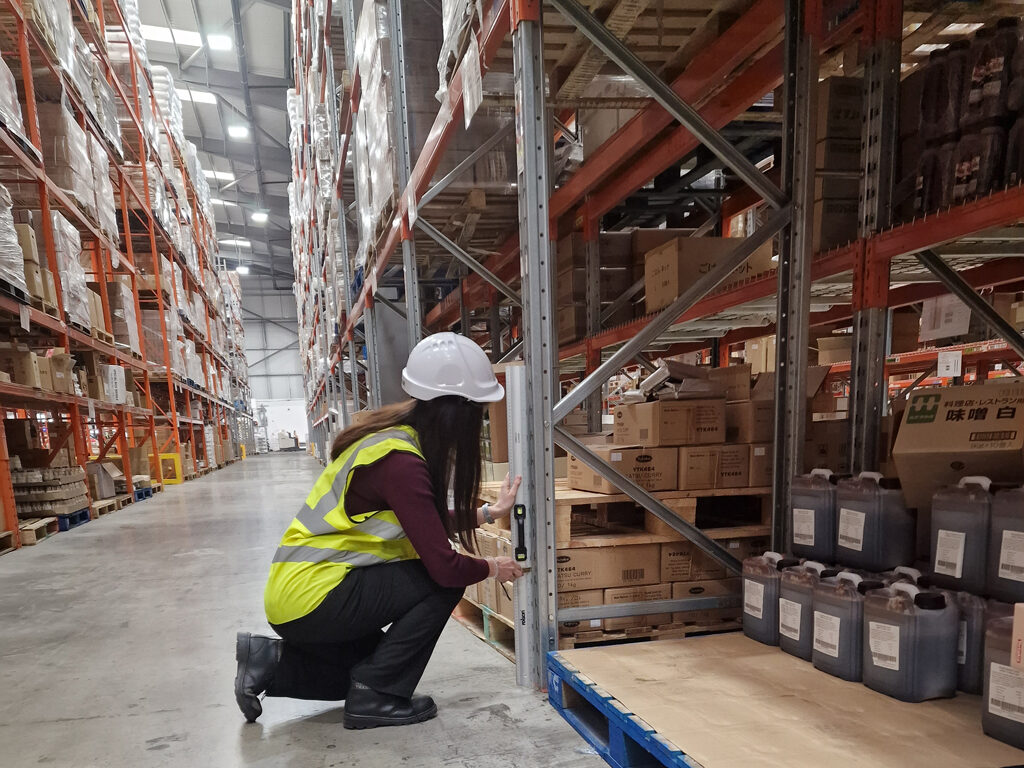
- What is SARI? At least once a year you must submit your pallet racking to an Expert Inspection undertaken by a trained professional. You can either opt for the industry standard ‘damage only’ inspection which lists damaged items and possible their location. Or have a safety inspection undertaken by a SEMA Approved Racking Inspector (SARI). Their report offers far more insight by identifying racking type, equipment compatibility, damage on the structure and floor fixing suitability. Significantly for warehouse owners, their report adopts a traffic-light system which outlines damage levels and timescales for repair.At least once a year you must submit your pallet racking to an Expert Inspection undertaken by a trained professional to ensure you meet HSG76 and PUWER regulations. You can either opt for a ‘damage only’ check which lists damaged items and possible their location. Or have a safety inspection undertaken by a SEMA Approved Racking Inspector (SARI).Their report offers far more insight by identifying racking type, equipment compatibility, damage on the structure and floor fixing suitability. Significantly for warehouse owners, their report adopts a traffic-light system which outlines damage levels and timescales for repair.
How to work with a SEMA Member
SEMA is made up of Approved Manufacturing and Supplier Members who are suppliers of pallet racks, cantilever racking, industrial warehouse shelving systems, mezzanine floors, racking accessories, safety systems and rack protection. We check the work of our members to ensure they are working to the highest industry requirements. They must meet either SEMA or European FEM standards, safety & reliability requirements and correct insurance in place.If you want to deliver assurances for your warehouse, why not work with a SEMA Approved Member. They will design turnkey projects that strategise for multichannel growth, space optimisation, stock rotation and helping avoid bottlenecks. Whether its a warehouse retrofit or new build distribution centres, they provide complete project management for your industrial premises to ensure your setup remains audit-ready long after assembly is complete. Our experienced members don't merely supply, install and inspect, they create a custom storage solutions that perform harder for your business day in, day out.FAQs about SEMA Approved Members
- What does it mean to be SEMA Approved? It means the supplier has passed the Membership Assessment Standard, proving they meet strict safety, design and installation requirements.
- Why should I choose a SEMA Member over another supplier? SEMA checks every member for compliance, insurance and training. Our members are incredibly qualified to provide you with bespoke solutions that meet the storage requirements for your warehouse. This reduces your risk and saves you the time of verifying credentials yourself.
- Is second-hand racking safe?
We don't recommend warehouse owners install second-hand racking in their website. Our reason for this is down to the lack of traceability on the equipment which increases the element of risk.
What is the difference between SEIRS and SARI?
- SEIRS ensures racking is installed safely by trained professionals.
- SARI provides expert inspections to keep racking safe long-term.
Ready to Choose a Safer Racking Supplier?
If you want to reduce risks, protect your staff and optimise your warehouse space, working with a SEMA Approved Member is the safest choice.
To find out more and view our list of SEMA Members, click here.