


Can You Carry Out Your Own Pallet Racking Repair?

Here’s a question we hear all the time at SEMA.
“Our in-house Visual Inspection has found some damage on the racking. It needs repairing, can we do it ourselves?”
It’s easy to see why a warehouse company would look to repair their own racking. First, there is the time element. Warehouses are busy places and waiting for external support can feel like a delay. Getting a contractor in to undertake the work and paying for the full replacement of parts all come at a price. Using your own team could reduce those costs. You also have your own maintenance teams, and you may assume their skills are transferable.
The difficulty is that your storage equipment is a precisely engineered rack structures. Whoever undertakes the racking repair requires a clear understanding of the system, the racking components and how to fix the damage.
So, to answer the question, can you repair your racking. Yes, it is possible but you MUST know what you are doing and understand the high risks that exist.
But, before you dive in and get your team ready to conduct racking repairs, read through our essential guide that will keep your storage system safe and your business legally compliant.

1. Have you identified the racking damage?
Before you start thinking about actual repairs, you need to conduct damage assessment.
To ensure you are compliant with health and safety legislation. In accordance with ‘HSG76 Warehousing and Storage – A Guide to Health and Safety’ from the Health & Safety Executive (HSE) you should ‘ensure that a racking installation continues to be serviceable and safe, the storage system should be inspected on a regular basis.’
The inspection process should include several levels of :
- Warehouse employees should immediately report if they spot damage on the racking
- A Visual Inspection (usually weekly) conducted by your Person Responsible for Racking Safety (PRRS). This inspection will identify impact damage on the structure and check that best practice is being followed. Their inspection report forms a crucial part of your Health & Safety documentation. Anyone undertaking the Visual Inspection must attend training such as the Rack Safety Awareness course.
- At least once a year, you must appoint a qualified professional to undertake your Expert Inspection. This in-depth inspection will check for damage, structural condition and equipment suitability. This is where our SEMA Approved Racking Inspector (SARI) can help – click here to find a list of available racking inspectors.
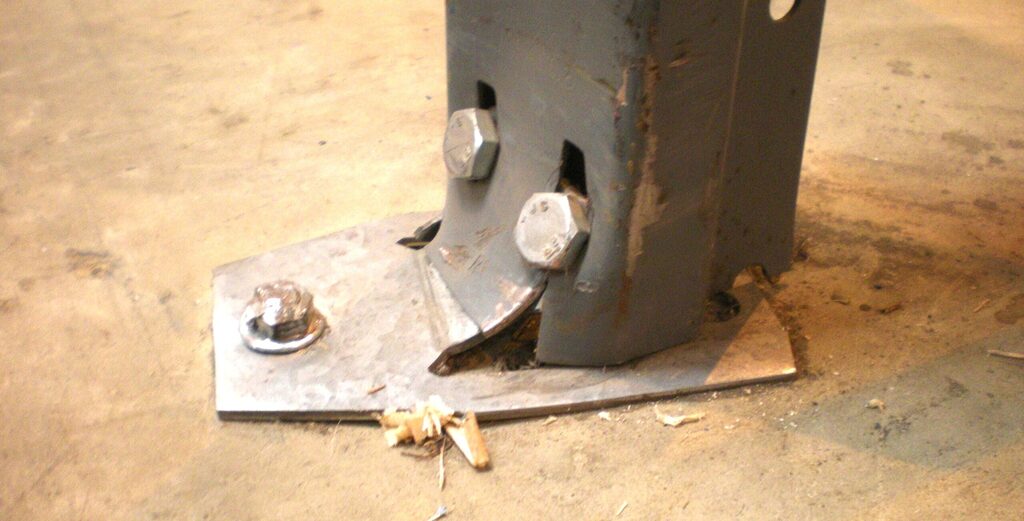
2. Have you categorised the racking damage?
Knowing the level of damage on your racking is a key step in knowing how quickly you need to get the problem repaired. Both your Visual and your Expert inspections should use a colour coded system of damage classification.In our Rack Safety Awareness and SARI training we explain our traffic light categorisation system:
- Red risk identifies high levels of damage and pallet racking should be immediately offloaded and put out of use.
- An Amber risk indicates where damage is sufficiently severe to warrant remedial work but does not require immediate offloading. Once the pallet locations in this area have been emptied, they should not be used until the repairs are completed. Racking repairs should be carried out within four weeks, or an Amber automatically becomes a Red risk.
- In Green areas damage falls within SEMA limits but recorded for further consideration at the next racking inspection. Green does not mean the damage is acceptable and you should not ignore it.
3. How to stay compliant with pallet racking repairs?

SEMA’s position has always been clear on the matter. Repairs MUST only be carried out by properly trained racking installers who understand the system they are working on and can follow the correct methods safely.
This is for three very important reasons. Firstly, HSG76, states that ‘Racking should only be installed by competent people in accordance with manufacturer’s instructions’. If an accident were to happen after repairs were conducted the HSE could investigate. If they find you failed to get the repair undertaken by a trained installer, your business could be fined.
The next issue is risking the structural stability of the racking. Only an installer who has been correctly trained on racking installations and repairs will understand permissible repairs and how changing elements on the racking affects the structure.
The last point is down to your racking warranty. In some cases, repairs that are not compliant with manufacturer guidance or don’t utilise Original Equipment Manufacturer (OEM) product can render your warranty null and void.
4. Who can undertake warehouse racking repairs?
When getting someone to repair your racking, you should be aware of the level of risk you are taking on. Which includes making sure you are using all the right components from the OEM, following manufacturer instructions to the letter, and keeping proper records of what has been done throughout the process. If it sounds like a headache, it’s because it is! And it’s an avoidable one when you can get someone to do it for you who will make sure it’s done properly.
It’s for this reason that racking repairs should only be conducted by trained installers.
It is for this reason we run our Storage Equipment Installers Registration Scheme (SEIRS) course. This training programme instructs installers on important health and safety factors when installing racking, industry standards and practical instruction on how to install racking correctly and safely. Most importantly, installers are assessed at the end of the course to check they meet the expected standards. They must also attend a refresher course every five years to update their qualification.

5. Can we send our warehouse employees on the SEIRS course?
Yes, anyone can attend our SEIRS training programme. However, It is worth noting that repair work can be MORE hazardous than installing new racking in the first place…not least because you’re often working around existing loaded racking and dealing with already compromised structures. Due to the level of work involved and the need to keep skills fresh, it is essential the installer is conducting installation and racking repairs on a regular basis.
It’s for this reason that we usually recommend that our SEIRS Installation course is not suited to end-user businesses that only occasionally carry out their own installation, modification, or repairs and therefore do not have the appropriate skill sets.
For most businesses, the safest option is to use a SEMA Approved Members. This gives you confidence that the installers regularly carry out the work, are trained and work to recognised standards.
Pallet racking repair checklist
If you need a professional company to repair the damage on your warehouse racks, always check the following to keep your employees safe:
- Ask what training qualifications the installers hold. You want confirmation they are SEIRS qualified.
- Check with the manufacturer to see if the racking supplier/installer is approved to undertake the work.
- Request clear written risk assessment and method statements and confirmation that the work will comply with SEMA guidance and manufacturer instructions.
- After completion, ensure documentation is provided detailing what was repaired or replaced. This should form part of your ongoing inspection records.
- After the damage has been repaired, the Person Responsible for Racking Safety (PRRS) should update their records.
Frequently Asked Questions
Can I repair my own pallet racking?
Technically yes, but only if the person carrying out the work is properly trained. SEMA’s guidance is clear that racking repairs must be carried out by trained installers who understand the system, the components, SEMA Codes of Practice and correct repair methods.
Who is qualified to repair warehouse racking?
Racking repairs should only be carried out by installers who hold a SEIRS (Storage Equipment Installers Registration Scheme) qualification. This ensures they have been assessed on health and warehouse safety, industry and SEMA standards, and practical installation and repair methods. You should also check that the installer is approved by the racking manufacturer to carry out work on their storage system.
How often should racking be inspected?
There are three levels of inspection required. Warehouse staff should report damage as soon as they spot it. A visual inspection (typically weekly) should be conducted by your Person Responsible for Racking Safety (PRRS). And at least once a year, a qualified SEMA Approved Racking Inspector (SARI) must carry out a formal expert inspection.
What are the categories of racking damage?
SEMA uses a traffic light system to categorise damage. Red means the racking must be immediately taken out of use and offloaded. Amber indicates remedial work is required. As the racking is emptied, it should not be refilled and the repairs should be completed within four weeks or the damage will automatically become a red risk. Green means the damage is within SEMA limits but should be monitored at the next inspection.
What happens if racking repairs are done incorrectly?
There are three main risks. First, if an accident occurs and the HSE investigates, your business could be fined if repairs were not carried out by a trained installer in line with HSG76 guidance. Second, poorly executed repairs can compromise the structural integrity of the entire adjustable pallet racking system. Third, repairs that don’t use Original Equipment Manufacturer (OEM) parts or follow manufacturer instructions can void your racking warranty.
What should I check before hiring a professional racking repair company?
Confirm the installers hold a SEIRS qualification, check they are approved by the racking manufacturer, request written risk and method statements confirming the work will comply with SEMA guidance, and ensure you receive full documentation of what was repaired or replaced — this should form part of your ongoing inspection records.

