


Getting More for Your Money – Pallet Racking Maintenance to Extend the Lifespan of Your Storage Equipment

For most warehouse operators, racking is one of the biggest purchases they’ll make. The upfront outlay is expensive but with big expectations on what it should deliver - supporting operations, increase the flow of goods and boosting efficiencies.
Once installed, the racking is expected to just… work. Day in, day out. Pallets in, pallets out. No fuss.
But here’s the uncomfortable truth - most warehouse owners and managers are losing money on their storage equipment investment. Racking that isn’t designed, installed or maintained properly will need replacing sooner than it should, minimising your Return on Investment (ROI).
The good news? Protecting the investment is easily achievable in only a few straightforward steps.
Working out the cost of neglecting racking
Racking isn’t really a “fit it and forget it” piece of equipment - it’s a structural system which heavily relies on being used the way it was designed. When this happens, racking can last a very long time. In fact, it’s perfectly possible for a racking installation to last the entire lifetime of a business.
The difficulty is that warehouse storage solutions change. Stock profiles shift, throughput increases, layouts get altered, forklift traffic gets heavier. Over time those changes put pressure on the racking system in ways it wasn’t really designed for. And when that happens, the cost starts creeping in.
The most obvious cost is repairs due to damage. Minimising the frequency and severity of the damage will reduce pallet racking maintenance costs. However, the cost of damage on the pallet racking system doesn’t only relate to the racking repair bill, you also need to consider how it impacts day-to-day operations? Depending on the level of damage you could see entire sections of racking being taken out of action which then reduces stock and order capacity.
How can your racking live longer?
Getting more life out of your racking isn’t complicated. It mostly comes down to a few practical things. Each one may feel like a small element, but they can quickly lead to more remedial work and shorter equipment life.
Correct design makes all the difference
If you’re ordering new racking, extending the lifespan of the structure starts at the design stage – long before the first pallet goes onto a beam.
Most racking is engineered bespoke for your warehouse. When the design matches operations, the structure should perform as expected for years. When it doesn’t, problems tend to show up fairly quickly.
The problems at the design stage cover four areas:

- Does the racking type suit the stock you’re storing?
Racking should work with the product, not against it. For example, conventional racking is designed for pallets or cartons but try to use the same structure for say long items such as timber or piping and problems will start. In this case, loads will overhang making forklift handling more awkward increasing the chances of damage to the racking structure and your stock. - Does the layout work for your warehouse environment?
If aisles are too tight or turning space is limited, forklifts are increasingly likely to damage uprights. Those small knocks might seem minor at the time, but each one immediately weakens the structural integrity and stability of the racking. - What loads is it designed to carry? Racking systems are designed for specific load limits. If the system is used within those limits, it should perform reliably, and for a long time. Push those limits and it will put stress on the structure it’s not designed for.
- Does the design meet industry standards?
Racking can only work correctly and safely if it factors in industry standards. Racking in the UK should be designed to either SEMA Code of practice or the European Code EN 15512. Warehouse racking systems are designed for specific load capacity limits. These codes help racking suppliers meet safety criteria to ensure the design meets structural analysis requirements and that all factors have been considered.
Protective guards
It makes sense for you to minimise the risk of impact damage to the racking from forklift trucks and other handling equipment. This is where preventative methods such as upright protectors, rack guards and end of aisle barrier protection can help.
These systems act as a barrier between the racking and the moving vehicles. You can also consider other safety measures such as mesh panels to prevent loose items from falling off the back or sides of racks.
If you need help with prevention measures, our SEMA Approved Members are experienced in such systems and can advise on the best approach for your equipment.
Minimise overloading - reduce racking damage

Continuous overloading and uneven stock placements will push the limits of the structure and created stress it is not designed for. Continue to push the limits of the pallet racking system and it will get damaged.
Reducing the risk of damage from overloading is possible when your team understand how to correctly work with the racking. That’s where the Load Notice comes in.
Attached to the end of a racking aisle, the load notice is an important safety sign which provides daily reminders to your employees on how to load the structure. It shows the number of pallets and weight limits that can be placed on beams and how to avoid uneven weight distributions. In simple terms, it tells you exactly how the system is meant to be used.
The problem is that these notices often fade into the background. They’re there, but they’re not always paid much attention. This is where employee training helps. Make sure staff know how to read the Load Notice, what those numbers relate to and why they matter. The final step is to regularly check correct load capacity procedures are being followed.
Routine inspections keep small problems small
Even with the right design and the correct loads, adjustable pallet racking will get damaged. The main thing is spotting damage early, which is where racking inspections play a major role.
The problem is that a lot of warehouses don’t understand the importance of implementing a continuous racking inspection programme. Get it right and it will significantly increase the safety of the warehouse and reduce unnecessary racking repairs bills.
The starting place is to appoint a Person Responsible for Racking Safety (PRRS) – usually a warehouse, facilities or health and safety project manager. They will ensure you meet your racking legal requirements by checking racking inspections are conducted and documented, analyse where regular incidents happen and recommend remedial actions and authorise the racking repair work.
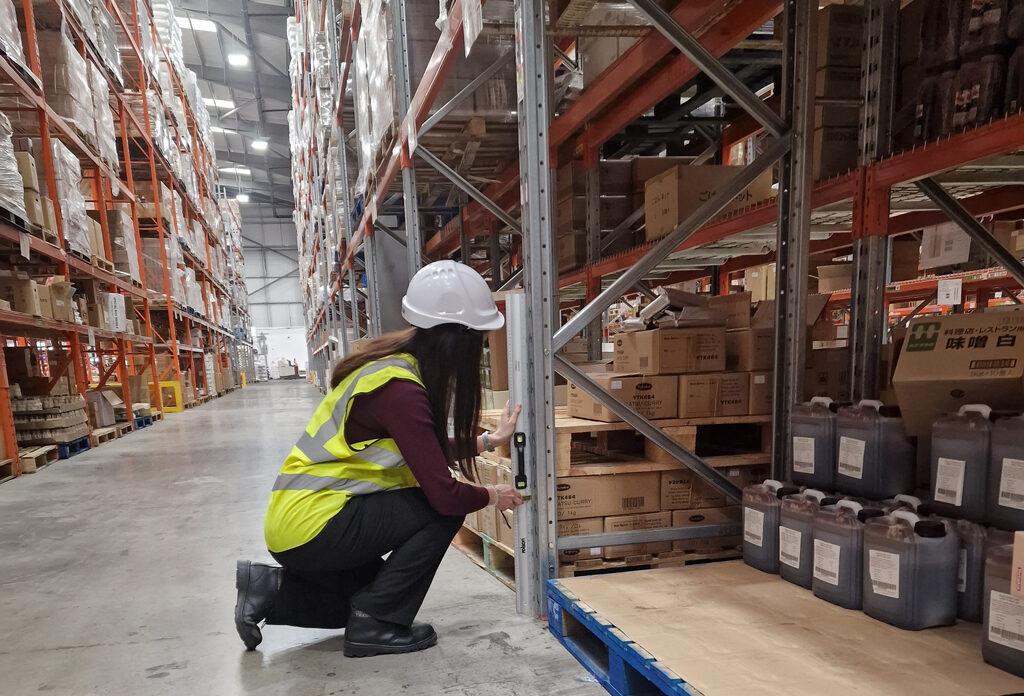
The first is simply the day-to-day awareness of warehouse staff. If you equip your employees with the knowledge they need to recognise damage on the racking, they can become your first line of defence. Anyone working daily in areas with pallet racking systems can report if they find an issue on the structure.
The next level are internal visual inspections. These are carried out by trained members of your team. They will carry out regular visual inspections to check Load Notices are visible, load distribution is correct and best practice is being followed and identify damage on the structure.
You will need to provide inspection training for employees to take on these roles.
Sign up to SEMA's Rack Safety Awareness course which will train employees on how to conduct visual inspections and for the role of Person Responsible for Racking Safety (PRRS).
Expert inspections
The racking inspection process doesn’t end with internal checks. At least once a year you need an Expert Inspections carried out by qualified professional such as a SEMA Approved Racking Inspector (SARI). Their safety inspections are a detailed report of the racking to identify if structural damage is present.
When you work with a SARI you will know they have undergone a rigorous inspection training course which verifies they have the knowledge and skills needed to undertake expert inspections that deliver a high level of detail.
Their expert inspection report will look at the type of pallet racking you have in your warehouse, its compatibility with other equipment, if the structure is suitably fixed to the floor and if load notice requirements are followed. They will also identify damage on the racking, where it is located and then grade its severity using a traffic-light system which guides you on the timescale for repairs.
Racking Repairs & maintenance need to be done properly
Once your inspection service flags up damaged components, you need to get them repaired. While quick, and potentially cheap, fixes might seem adequate, in reality, they are usually weakening the integrity of the structure.
Improvised repairs are something inspectors still see fairly regularly. Sometimes uprights are drilled or welded in ways that were never part of the original design. In other cases, replacement components don’t match the system they’re being installed into.
When it comes to repairs you need to follow three very strict measures:
- Only get the racking repaired by a qualified installer. Check they have received training on racking installations such as our SEIRS course. They will have been taught on correct installation methods and how to meet industry standards.
- Don’t invalidate the manufacturer’s warranty – every manufacturer of racking will have different conditions on who can undertake work on your racking and what parts are approved. Fail to do this and you could find your structure is no longer protected.
- Only allow industry approved repairs. The Storage Equipment Manufacturers Association (SEMA) has developed guidance on what repairs they deem are safe and permissible. Failing to get the correct work done on your racking can impact on the safety of the structure. To find out what repairs are allowed, check out our technical bulletins.

How to look after your racking investment
The thing is, racking is a long term asset. When it’s installed properly and looked after, it can support warehouse operations for decades.
The thing is, racking is a long term asset. When it’s installed properly and looked after, it can support warehouse operations for decades.
Extending the lifespan of your racking isn’t about doing anything particularly complicated. It’s about getting the basics right.
Making sure the system is designed for your operation. Understanding pallet racking system load capacity. Keeping inspections regular and meaningful. And ensuring repairs are done properly.
Those steps help protect the structure itself, but they also protect the wider business. They reduce disruption, safety risks and help demonstrate that warehouse operations are being managed responsibly.
For warehouse owners and managers, that’s ultimately what matters. Because racking is a significant investment, and with the right care it can continue delivering value for many years.
If you need help with your racking maintenance, get in touch with SEMA.
