


The Dos and Don’ts of Racking Repairs

Walk into most UK warehouses, and you’re going to see the same thing. Rows of pallet racking carrying stock, forklifts moving around nonstop, and teams working hard to meet tight deadlines.
With so much movement going on, it’s inevitable that your storage equipment will get damaged at some point.
Ignoring that damage or getting incorrect repairs can easily lead to your racking failing and tonnes of stock falling to the warehouse floor. At best, you’re left with an extensive clean up job and delayed operations while the racking is fixed. At worst, you’re risking the lives of your employees.
With that in mind, let’s take a look at this practical guide on the dos and don’ts of racking repairs, drawing on SEMA technical guidance.
The Don’ts
Don't Ignore Racking Damage
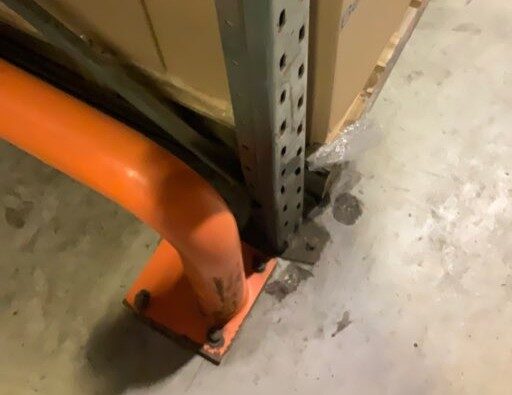
When your supplier designs your pallet racking system, they create a structure engineered to meet precise tolerances that can safely support the heavy stock it holds. While those steel beams and uprights, anchored to the floor, look solid and permanent, they are not indestructible.
Forklift impacts are common in warehouse environments. Most operators will have seen an upright that has been clipped at some point.
The mistake is assuming that because the rack is still standing, it is safe.
Waiting until the next annual inspection is not an acceptable response to serious damage. Metal that has been bent once is more vulnerable. Connections that have been stressed can loosen further. That damage has weakened the racking which impacts on it structural stability.
Don’t Overlook Employee Training

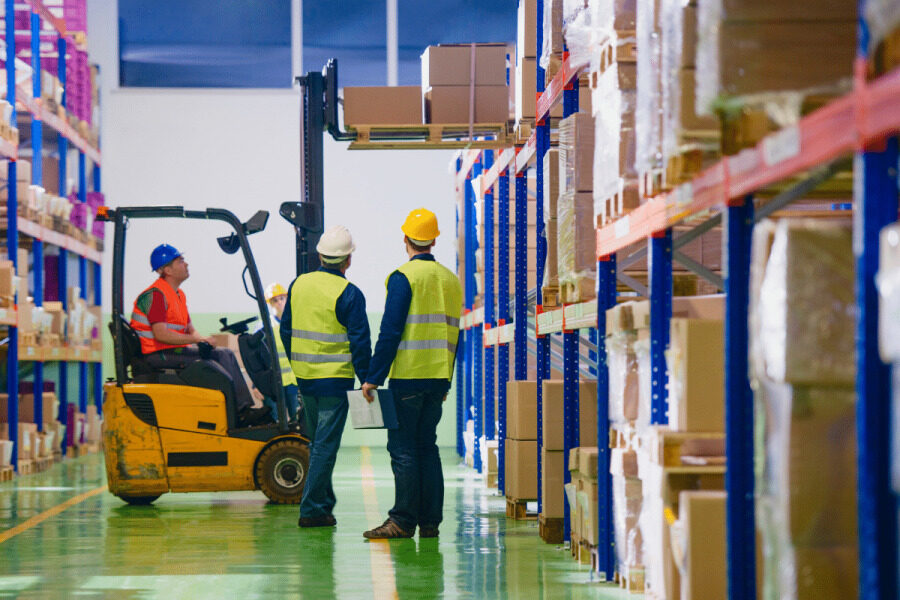
Warehouse operatives and supervisors play a key role in protecting your racking. Without basic rack safety awareness training, employees won’t understand what different levels of damage look like on the structure. Without that, they can’t report when they find a problem.
An informed workforce is often the first line of defence, which is why you need training. A course, such as our Rack Safety Awareness training, will provide them with the basics they need, including how to identify damage on the structure and the importance of regular inspections.
The course will also instruct your Person Responsible for Racking Safety (PRRS) and nominated employees on how often to conduct in-house inspections in accordance with SEMA safety guidelines. The training covers how to comply with the law, conducting risk assessments and recording an inspection.
Don’t Use Unauthorised Contractors
Of course, when damage occurs, you need to get a contractor in to repair it.
Don’t let price be the sole deciding factor when appointing a repair contractor. Instead, look at two other key factors.
First, has the contractor been approved by the manufacturer to undertake the repair work on your racking? To protect the integrity of their equipment, some manufacturers may require only using companies approved by them, otherwise it could invalidate your warranty. For example, some SEMA Approved Manufacturers approve SEMA Approved Members to undertake work on their behalf.
The second factor to consider is whether the contractor is using parts approved by the manufacturer. The repair company may not appreciate the implications of substituting components. They could install incompatible parts that create weaknesses or components unapproved by the manufacturer, without proper checks.
If something goes wrong later, responsibility may ultimately sit with the duty holder.
Don’t Approve Unauthorised Repair Work

The Storage Equipment Manufacturers' Association (SEMA) makes it clear that not every repair method is acceptable, even if the damage appears to have been put right.
Some practices may make a rack look straight again, but that does not mean its strength has been restored. For example, SEMA does not recommend straightening damaged uprights with hydraulic rams, as highlighted in Technical Bulletin No. 04, because the steel may already have been weakened.
Welding structural components on site, altering components without the manufacturer’s approval, fitting non-approved or incompatible replacement parts, or mixing systems from different manufacturers without proper checks can all compromise safety and potentially invalidate warranties.
Any repair that does not follow SEMA advice or the original manufacturer’s guidance should not be signed off. If there is any doubt about the repair work, get in touch with SEMA.
The Dos
Do follow racking regulations
Your racking is classed as ‘work equipment’. Under the Provision and Use of Work Equipment Regulations (PUWER), employers must ensure that it is maintained in an efficient state and in good working order. As the warehouse owner or manager, you are legally responsible for ensuring repairs are undertaken in a timely manner.
Following guidance in HSG76 Warehousing and Storage: A Guide to Health and Safety, you should also appoint a PRRS. This is usually your warehouse, facilities or health & safety manager who is responsible for upholding racking safety standards and analysing why damage problems occur.
Do Put a Proper Inspection Regime in Place
If repairs are the cure, inspection is the diagnosis.
Every day, anyone working in areas with racking should be on alert for damage and know how to report problems to the PRRS. The next stage is for trained members of your team to regularly conduct in-house inspections. The final step is an annual inspection by a technically competent person, such as a SEMA Approved Rack Inspector (SARI).
These layers matter. Daily checks catch obvious impact damage quickly. Regular internal inspections check for storage racking damage and pick up where bad practices occur. The annual expert inspection provides independent technical oversight.
Without this structure, damage can sit unnoticed for months. By the time it is discovered, repair costs are higher and risk exposure has increased.
Do Record Damage Properly
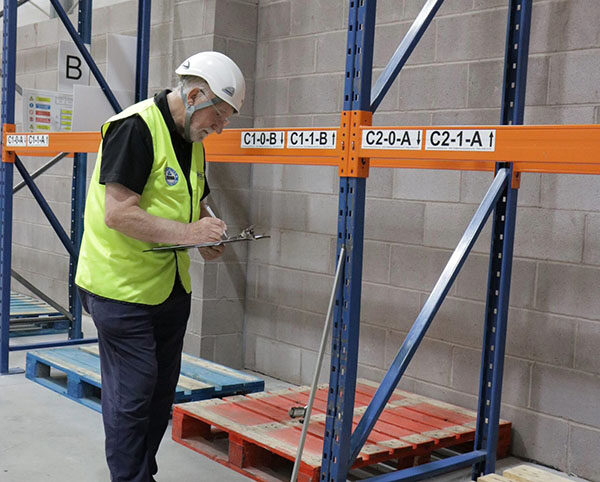
Spotting damage is one thing. Recording it correctly is another. Clear inspection records demonstrate due diligence. In the event of an accident, the HSE will investigate and check documentation, and corrective actions have been taken.
In-house inspections undertaken by trained members of your team must conclude with a record of their findings including the date, location, risk categorisation and action points.
When it comes to your Expert Inspection, you need clear guidance on the level of damage and clear guidance on actions. When a SARI conducts your inspection, they will use a colour coding classification system. This approach has been designed by SEMA so the PRRS knows prioritises for repair work. Red risks require immediate unloading and isolation. Amber risks demand action within four weeks otherwise they automatically turn to a red risk. Green indicates damage is present and should be monitored.
SEMA has published several technical bulletins that clarify repairs best practice. These bulletins are not theoretical documents but are developed to deal with real problems seen in the field.
For example, Technical Bulletin 1 does not recommend welding involving welding to straighten bent material. However, it does explain that the original manufacturer may train and certify operatives to carry out a straightening operation, which is then reinforced with a metal sleeve.
Ignoring such guidance because a repair appears cheaper in the short term can be a false economy. When SEMA advises against certain practices, it is based on engineering considerations and industry experience.
SEMA technical bulletins can be accessed via the SEMA website and should form part of any responsible operator’s reference material.
Do Use Trained and Competent Installers
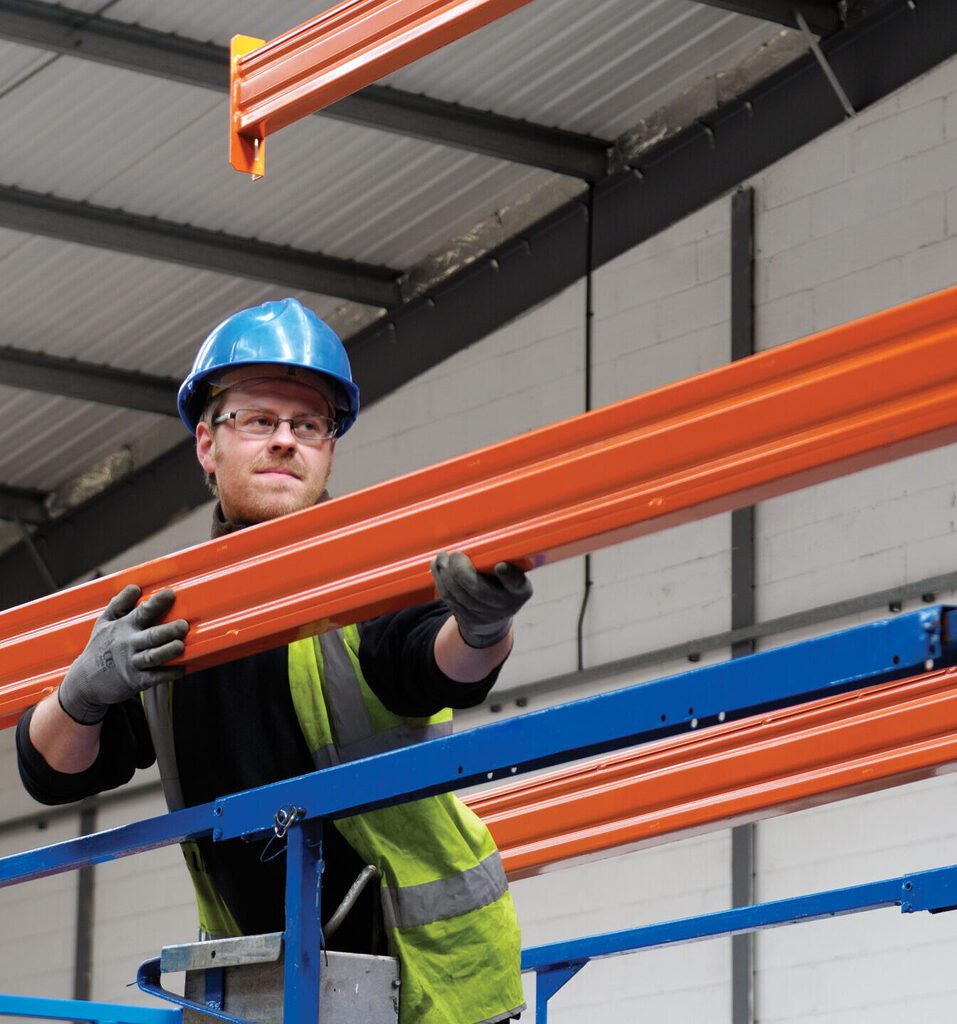
Racking repairs should only be undertaken by a trained installer. Choosing who completes the work is a decision that deserves the same level of consideration as the installation team that initially installed your equipment.
When it comes to installers, there is no required industry standard they must meet. In reality, a lot of them still ‘learn on the job’ with no formal training. This leaves you with the problem of not knowing if they understand the difference between permitted and restricted work.
SEIRS is SEMA’s recognised training scheme for installers and repairers of storage systems. Individuals who complete two training courses and pass an assessed part of the course will receive their full SEIRS card.
Engaging SEIRS-registered installers provides reassurance that the work is carried out in accordance with SEMA Codes of Practice and recognised industry standards. It also demonstrates that you, as the employer, have taken reasonable steps to ensure skilled contractors are used.
When sourcing repair support, ask to see evidence of SEIRS registration. It is a simple step that can prevent significant issues later.
Finding a Reliable Racking Repair Company
When damage occurs and external support is needed, the selection process should be deliberate.
Start by verifying competence. Ask whether installers hold valid SEIRS registration. Check with the manufacturer if the racking supplier is approved to undertake the work.
Request clear written method statements and confirmation that work will comply with SEMA guidance and manufacturer instructions. And, after completion, ensure documentation is provided detailing what was repaired or replaced. This should form part of your ongoing inspection records.
A Final Thought on pallet racking repairs…
Warehouse racking repairs are not glamorous and usually don’t attract attention until something fails. Yet the decisions made after an impact, a dent or a failed inspection can define the safety culture of an organisation.
The fundamentals are straightforward. Inspect regularly. Record consistently. Act promptly. Follow technical guidance. Use competent people. Replace racking components when required. Avoid improvised structural fixes.
Cutting corners in racking repair rarely saves money in the long term. It introduces uncertainty into a storage racking system designed to be predictable and engineered. Remember, when it comes to your storage racking, steel can be replaced, lives cannot.
