


Want A Safer Workplace? Watch Out For A Warehouse Training Course

Want A Safer Workplace? Watch Out For A Warehouse Training Course?
Training forms the basis of most businesses today. If you don’t know how to correctly perform the required tasks for your role you will be inefficient in your job. But, training also plays a key role in creating safe working warehouse environment for employees. An important consideration when you consider that industries such as manufacturing, logistics, and construction, frequently appear in the top 10 list of dangerous places to work.
We look at the impact racking training has when raising warehouse safety standards.
Do you need a warehouse training course?
It’s not unsurprising that the warehouse sector is such a dangerous working environment. Forklift trucks and automation are moving around the space, there is a constant risk of items falling from height, trip hazards and every day your employees are performing manual handling tasks. A warehouse training course ensures everyone knows how to work safely within the workplace.
Yet, regardless the warehouse your running, one training area you may not have considered is with your storage systems.
Today’s storage equipment systems are built to last. But, you can only capitalise on the structure’s longevity if all those involved over the lifetime of the racking are meeting the same high standards. This starts with racking design and installation and continues through to the correct usage and continuous inspection and maintenance. Tick the training boxes at each key stage and it will maximise the investment you’ve made into your racking. Reducing potential downtime, damaged stock, avoiding unnecessary repair bills and resulting in fewer accidents.
The Owner's Role in Racking and Safety in Warehouses
While you may think your key responsibilities for training lies only with employees on the warehouse floor. In reality, as the warehouse manager and owners, you need to check everyone involved throughout your racking’s lifetime is trained. Even the teams used by your suppliers!
This isn’t merely a ‘nice to have’, it goes deeper by ensuring you are working within the Health & Safety Executive (HSE) and industry regulations. For guidance relating to your racking, look at HSG76 Warehousing and Storage: A Guide to Health & Safety along with SEMA Codes of Practice. These frameworks are written to cover the key stages in the lifetime of your equipment.
While it is not a legislative requirement to follow these documents, if an accident happened in your warehouse and the HSE were to take enforcement action, they can use these frameworks to enforce action against your business. Fines for failing to demonstrate due diligence can be hefty.
Trained Installers
Training starts with your installers. You might not have previously considered the capability of your racking installer but it is an important factor when delivering safe racking. After all, your storage system plays a crucial role in keeping tonnes of stock level safely held above the heads of warehouse operations. If the installer has incorrectly installed or missed a crucial step in the racking designer’s specification, it can quickly result in a system which is not up to the job. The last thing you need is for any part of the racking to fail due to poor installation methods.
Trained Warehouse Team
When working in with racking, employees need training on how to read the Load Notice sign, load the system, work around operating equipment and potential hazards. Yet, there is another factor you need to consider and that is in the everyday safe maintenance and inspection of storage equipment.
Under PUWER and HSG76 Warehousing and Storage: A Guide to Health & Safety you have a responsibility to inspect your racking. It’s a lot more frequent than you think. Follow the guidance from HSE and SEMA and they advise following a three-tiered approach. Every day ensure employees working in areas with racking can recognise and report if they find damage on the racking.
You then need to appoint a member of your team to take on the role of Person Responsible for Racking Safety (PRRS). They will be responsible for checking that racking inspections and maintenance records are performed. They will also need the knowledge required to analyse racking damage data, identify if regular issues are occurring and how to propose and implement actions. The PRRS should also be in a position where they can authorise immediate action if needed and ensure repairs are carried out.
Finally, train a member of your team to undertake the Visual Inspections.
Trained Racking Inspectors
The last part of the racking inspection circle is the Expert Inspection. Conducted at least once a year, only a qualified professional can undertake this in-depth inspection process. A lot like installers, the skillset and knowledge of your inspector will factor heavily into the safety of your racking. Look for an inspector who has the correct engineering skills and can recognise and assess the severity of any damage they find on your racking. You should also check their reporting methods to provide you with clear instructions on what actions you need to take.

SEMA Warehouse Training Course
To meet the legislative requirements of a busy warehouse, SEMA set out to provide training that covers these key stages in your racking’s lifetime. Our courses follow both SEMA and industry standards and have been developed by accomplished industry experts.
SEIRS Training Courses
If you want reassurance that your racking installer is trained for the job, ask if they hold a SEIRS card. The Storage Equipment Installers Registration Scheme (SEIRS) is a benchmark for the warehouse sector to ensure racking installers had the skills and knowledge to work safely and meet SEMA guidance. Our SEIRS courses are RoSPA-certified and referenced in HSG76.
The programme is intensive and offers five courses that build into a solid warehouse safety training structure:
- SEIRS Foundation - This course is a detailed introduction for racking installers which covers generic and industry-specific health & safety risks. On completion, installers receive a SEIRS Trainee card valid for six months. This provides them with the time they need to develop their on-site skills while under supervision.
- SEIRS Diploma - Installers complete their SEIRS qualification by attending the Diploma course. Not only does this course cover key topics including the theory behind correct racking installations but also provides installers with practical instruction on correct methods. To ensure they measure up to our high standards, we assess them at the end of the course. On passing, their full SEIRS card is awarded, which is valid for five years.
- SEIRS Refresher - At the end of the five years, SEIRS Diploma installers must attend a Refresher course to maintain their qualification. This will ensure their knowledge is up-to-date and meets the latest safety legislation and procedures.
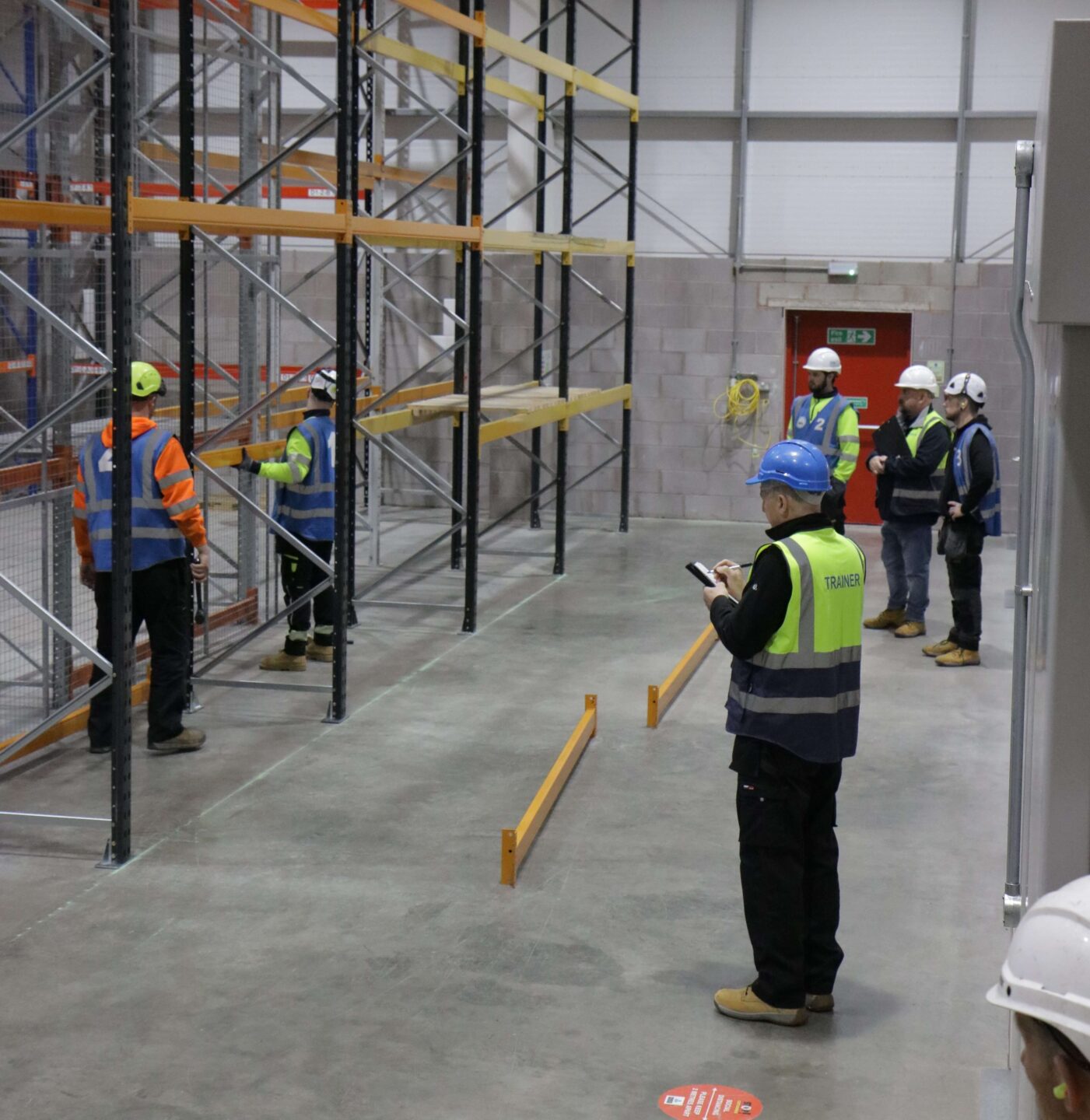
- Higher-level SEIRS - We also offer two higher-level SEIRS courses for anyone who is responsible for installation teams. These include our SEIRS Supervisor and SEIRS Manager training courses.
SEMA Rack Safety Awareness Course
To ensure your employees are racking aware, we suggest they attend one of our Rack Safety Awareness courses. The one-day course provides them with the basics of racking including how to identify damage to the structure and understanding the importance of regular inspections.
The course also prepares a member of your team to undertake the vital role of Person Responsible for Racking Safety. On the course, they will learn how often they need to carry out basic racking in-house inspections and what their core duties include. The programme covers how to carry out basic rack inspections in accordance with SEMA safety guidelines and guidance on the key elements of their role. It also offers advice on how to comply with the law, conduct risk assessments, record an inspection, a detailed report, damage levels and action points.

SEMA Approved Racking Inspector
SEMA set up the SARI initiative to raise standard levels in racking inspections. Within the storage industry, there are two main types of inspection; a “Damage-only” inspection will list damaged items and possibly their location while an inspection by a SEMA-Approved Racking Inspector offers far more useable detail. This includes identifying the racking type, equipment compatibility, damage, floor fixing suitability and minor issues. It also adopts a traffic-light system which outlines the level of damage and timescales for repairs.
The second benefit of using a SARI is the reassurance it delivers by proving they have a significant level of engineering knowledge to deliver high-quality, safe inspections. To become a SARI, the inspector must pass an intensive three-day warehouse training course. They only earn their qualification once they have completed both a written examination and a practical assessment. To ensure inspectors’ knowledge is kept up to date, they must also complete Continuous Professional Development (CPD) points.
SEMA's New Training Facility 2025
According to recent industry data, the warehousing and storage market witnessed substantial growth last year. This grew from £283.10bn in 2023 to £305.23bn in 2024, with even further expansion anticipated in the coming years.
This growth is certainly something we have experienced at SEMA and our training courses are regularly booked up. To meet the growing demand, we’ve now opened our second brand-new training facility. The purpose-built warehouse setting will be used primarily to deliver our SEMA-Approved Racking Inspector courses. The space is set up to meet the needs of the course and includes a training room, kitchen facilities and a warehouse with pallet racking systems from our SEMA Manufacturing members with each one showing different damage examples for the inspector to recognise.
If you want to show a commitment to warehouse safety and would like to sign up for a SEMA warehouse training course, head over to our SEMA training pages.

